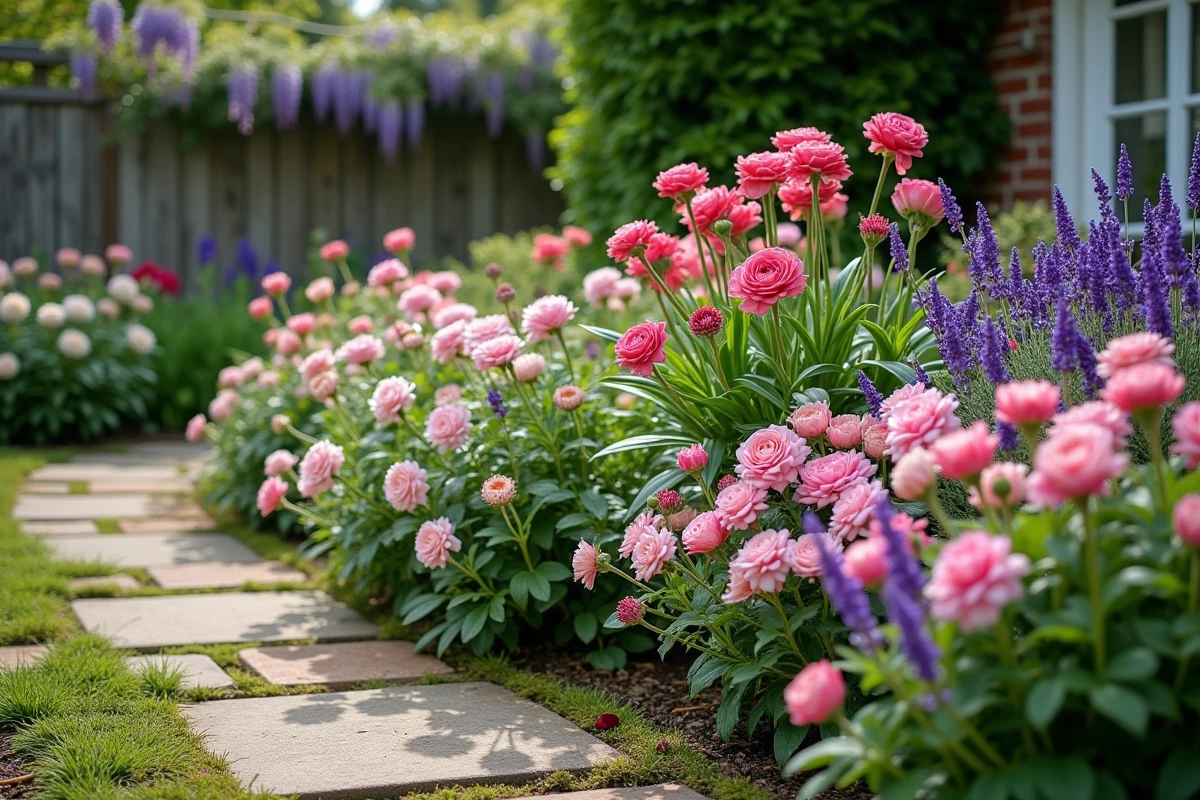
A flower garden all year round is based on a simple technical principle: the succession of flowering periods. Each plant has a limited flowering window, rarely exceeding five months in our latitudes. Therefore, achieving a colorful flowerbed year-round requires combining species whose cycles alternate, from the heart of winter to the first autumn frosts.
Heat-resistant flowers: varieties to favor after recent heatwaves
Prolonged drought episodes have changed the game for choosing garden flowers. Several French and German botanical gardens now recommend hybrids selected to withstand extreme heat, particularly among echinaceas and gaillardias. These varieties tolerate dry, stony, or sandy soils, making them suitable for a wide range of terrains.
Nepeta and coreopsis complement this group well. Their ability to re-bloom after a summer cut makes them reliable allies for maintaining color between July and September, even when watering becomes scarce.
To explore a wide catalog of garden flowers with Jardindivert, sorting by drought resistance allows for a quick refinement of selection based on local climate.
Long-lasting blooms: alstroemeria and gaura at the forefront
Some plants stand out for their flowering that covers a significant part of the year. The alstroemeria (Alstroemeria) is one of the few species capable of re-blooming over a very long period, both in beds and pots. Feedback from specialized nurseries in France and the Netherlands confirms that new varieties provide cut flowers almost all summer long, and even beyond depending on the regions.
Gaura (Gaura lindheimeri) plays a comparable role. Its airy silhouette and flowering that stretches from spring to frost make it a solid choice for south or west-facing borders.
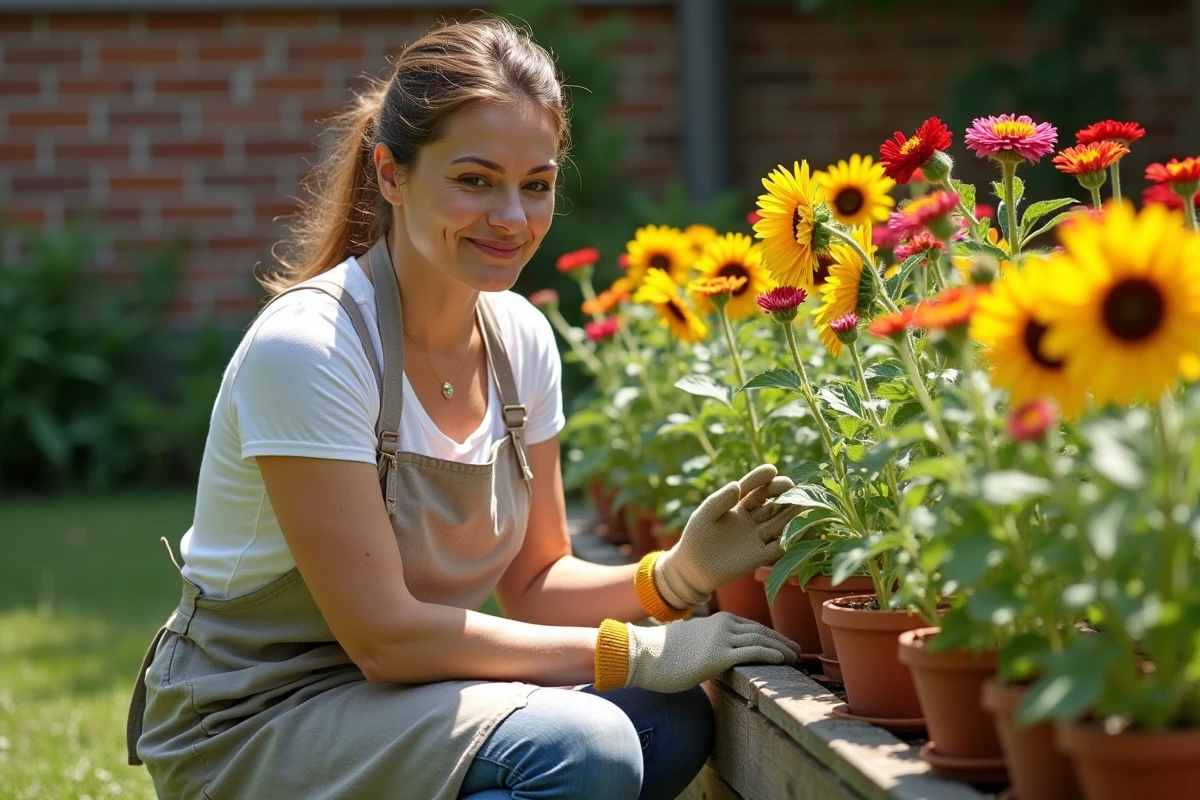
These two plants share a practical advantage: they require little routine maintenance. A cut back after the first wave of flowers is usually enough to trigger a second bloom.
Mixed borders: combining ornamental flowers and edible perennials
Horticultural trials by the Royal Horticultural Society (RHS) published in 2023 highlight an approach that is gaining ground: mixed borders combining ornamental flowers and edible perennials. Borage, nasturtiums, and marigolds fit into a classic bed while attracting pollinators and beneficial garden insects.
This association is not just a passing trend. It serves a measurable goal: to improve useful biodiversity in a limited space. Marigolds repel certain pests, borage dramatically attracts bees, and nasturtiums act as a trap plant for aphids, which then neglect the neighboring roses.
The interest in garden decoration remains intact. The orange hues of marigolds, the bright blue of borage, and the deep red of certain nasturtiums create a bouquet of colors as rich as a purely ornamental bed.
Planning the succession of blooms season by season
A flower garden all year round is not improvised. It is designed like a living calendar. Here is a working basis for organizing the succession between species:
- Late winter and spring: early bulbs (crocuses, daffodils, tulips) that emerge as early as February, followed by spring perennials like perennial geraniums starting in April.
- Summer: echinaceas, gaillardias, gauras, and alstroemerias take over, with overlapping blooms from June to September. Roses, depending on the remontant varieties, complete the picture.
- Autumn and early winter: rudbeckias and heleniums extend color until October. Ornamental grasses (miscanthus, stipa) ensure a visual transition to the cold season with their golden spikes.
A common mistake is to focus purchases on plants in bloom at the time of the visit to the garden center, which produces a spectacular bed in June but empty in October. Choosing at least one species for every two-month period ensures consistent coverage.
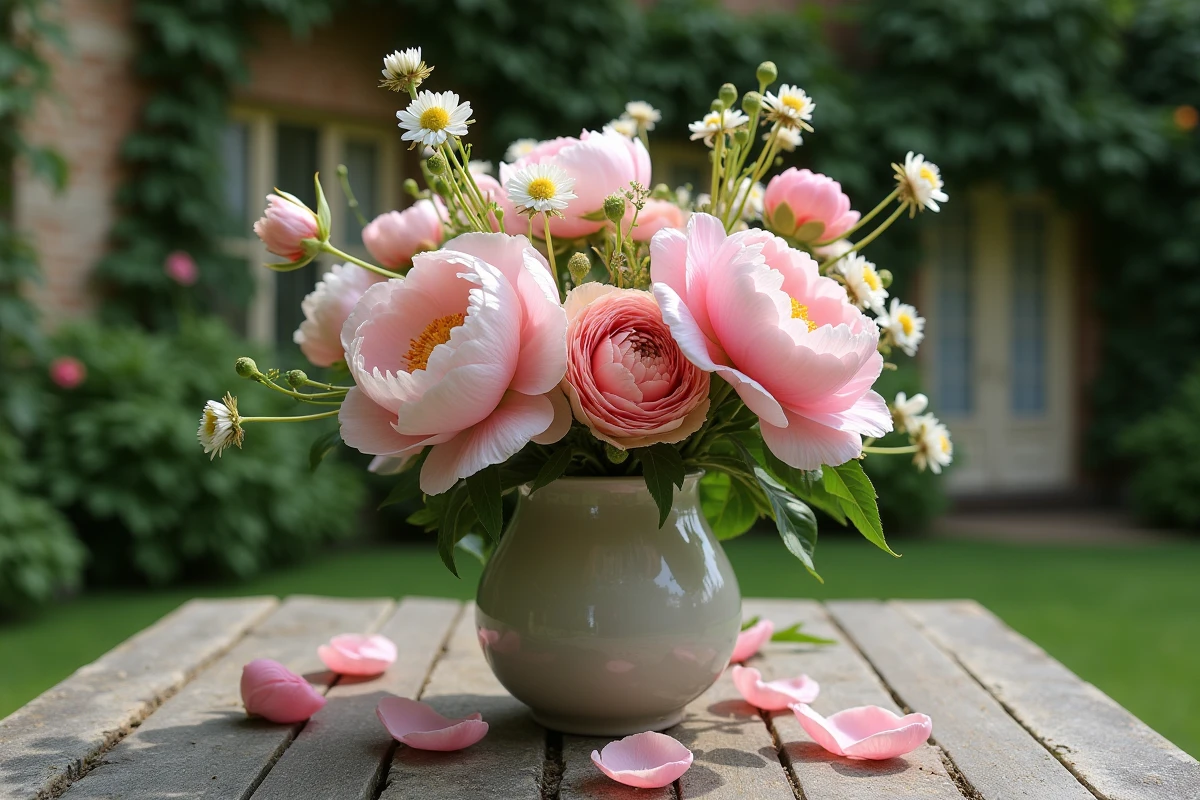
The role of bulbs in floral continuity
Bulbs deserve special attention. Planted in the fall, they require minimal initial effort for reliable results year after year. Daffodils and crocuses naturalize in the lawn or at the base of shrubs, which avoids reserving dedicated space for them in the flowerbed.
When paired with perennials that take over in May, they create a smooth transition between the end of winter and the beginning of summer, without any gaps in the bed.
Soil and exposure: two parameters that take precedence over aesthetic choice
Recent horticultural guides emphasize a point that is often overlooked: adapt the plant to the existing soil rather than the other way around. A calcareous and draining soil is perfect for lavenders, sages, and echinaceas. A clayey and cool terrain is more suited to astilbes, ligularias, or daylilies.
Exposure plays an equally crucial role. A south-facing terrace requires plants that can withstand several hours of direct sunlight, while a bed under a deciduous tree benefits from partial shade, ideal for hellebores or brunneras in late winter.
Before choosing a flower for its color or petal shape, checking the soil pH and the number of hours of daily sunlight remains the most cost-effective action. A three-euro rudbeckia plant placed in the right spot will bloom for years. The same plant installed in waterlogged and shaded soil will disappear within months.
The success of a flower garden all year round relies less on the number of species than on the precision of their placement. Three or four well-positioned perennials, complemented by spring bulbs and one or two winter-flowering shrubs, are enough to cover the four seasons without turning maintenance into a weekly chore.