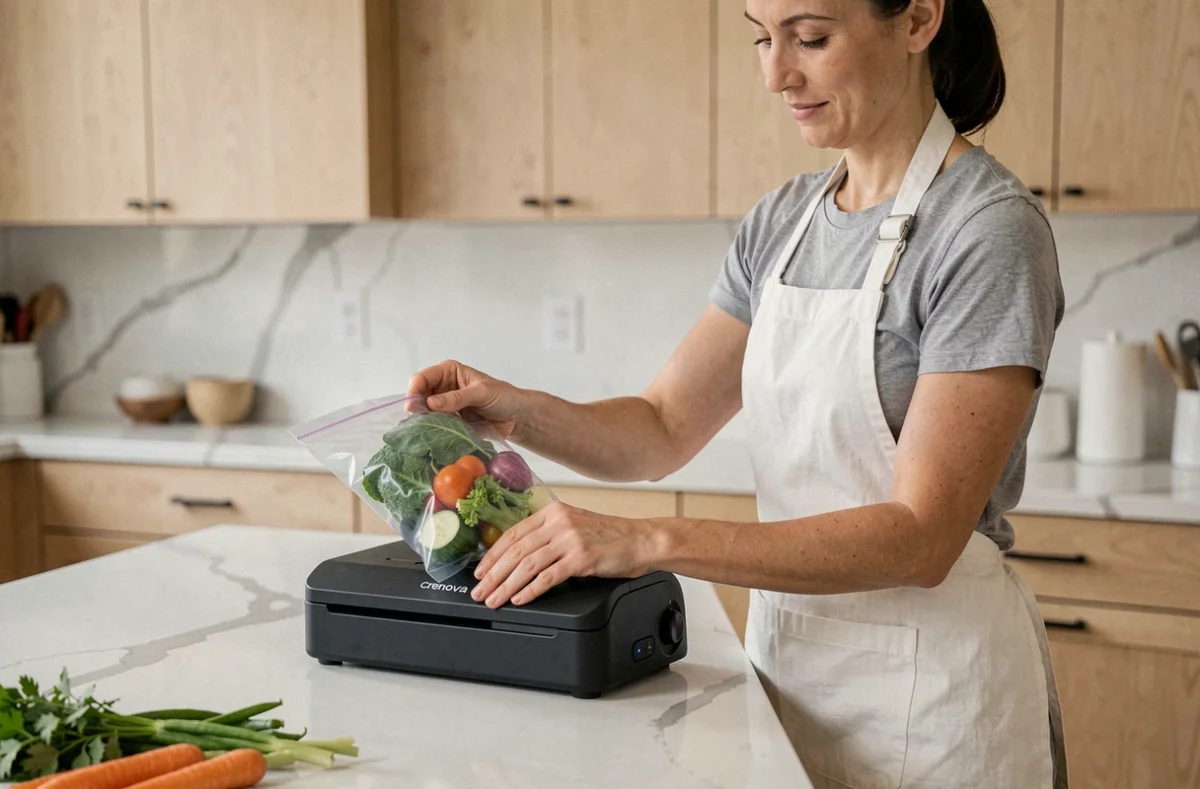
Is an inexpensive vacuum sealer enough to package meat, vegetables and everyday leftovers, or does this type of appliance work best with dry portions intended for the freezer?
The Crenova VS100S is an entry-level model sold with a starter kit that includes bags. It offers four functions (Seal, Vacuum, Pulse, Cancel). Before buying, the key question is less about the listed specifications than how the appliance actually handles different foods, including moist or delicate ones.
Moist and delicate foods: the practical limits of external suction
External-suction vacuum sealers like the VS100S share a common physical limitation. Liquids can interfere with suction and bag sealing, because the pump draws air out through the bag opening. If juice or marinade reaches the sealing bar, the seal may not hold.
With soft foods (ripe fruit, fresh fish, soft cheese), suction pressure can crush the texture before the bag is sealed. The VS100S’s Pulse function lets you control suction manually by pressing in short bursts, reducing this risk. In practice, it takes a little experience to find the right balance between removing air and preserving the food’s shape.
One common way to work around the problem of liquids is to partially freeze moist foods before packaging them. Sauces, soups or marinated meat can spend an hour in the freezer, just long enough for the surface to firm up, then be sealed without liquid reaching the pump. This is not a flaw specific to the VS100S, but a limitation shared by all external-suction machines. To learn more about the Crenova VS100S and its detailed specifications, the model remains affordable despite this limitation.
Vacuum sealing and freezing: what the VS100S really changes
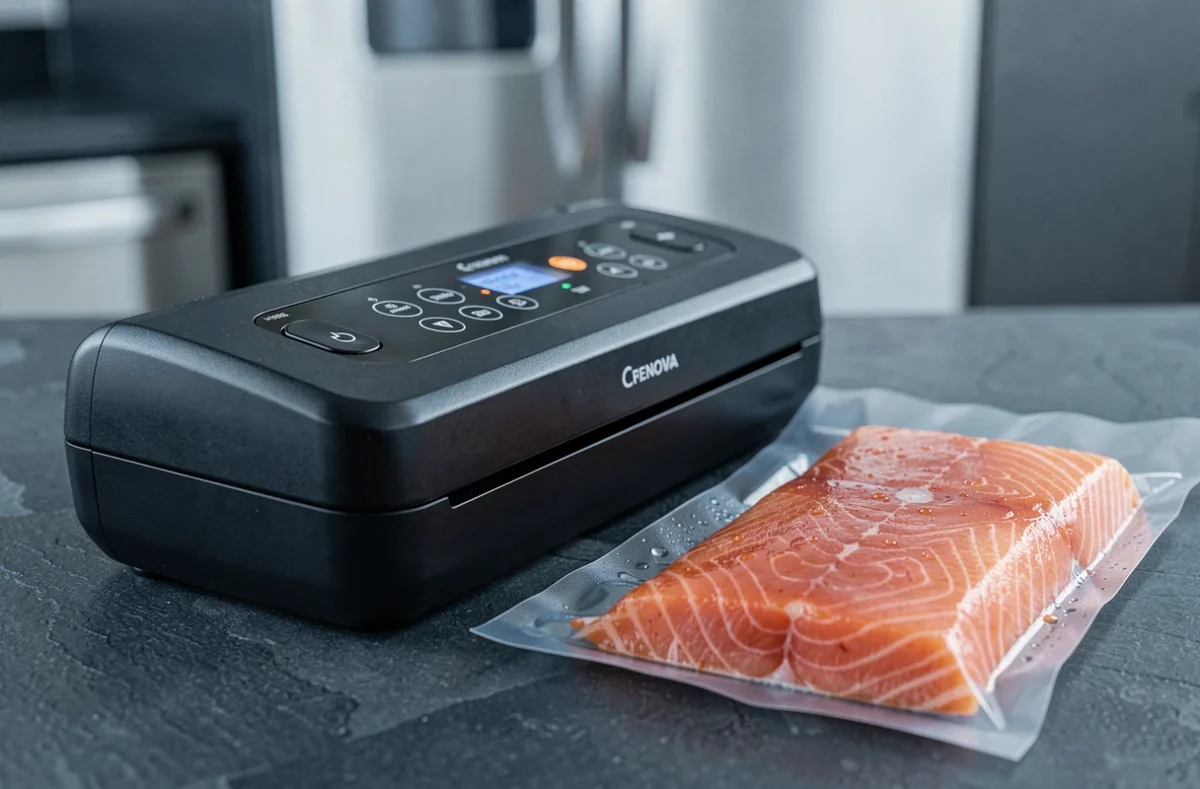
The main benefit of a home vacuum sealer is extending food’s shelf life in the freezer. Removing air helps limit dehydration and freezer burn—the whitish patches that affect the taste and texture of food stored for a long time.
One important point: vacuum sealing does not sterilize food. According to recommendations from the USDA Food Safety and Inspection Service, vacuum-packed meat and poultry must be kept refrigerated or frozen. Removing air from a bag does not make perishable food safe to store at room temperature. This changes how you should think about using the appliance day to day: the VS100S complements a refrigerator or freezer; it does not replace one.
For dry portions (dried vegetables, grains, biscuits, whole coffee beans), the appliance works without any limitations. Suction is quick, the seal is clean, and the bag stays airtight over time. This is the easiest and most reliable use for this type of machine.
Comparing uses by food type
| Food type | Ease of vacuum sealing | Precaution required |
|---|---|---|
| Dry portions (grains, coffee, biscuits) | No difficulty | None |
| Unmarinated raw meat | Easy | Check that the seal is airtight |
| Marinated meat or foods in sauce | Tricky | Partial pre-freezing recommended |
| Ripe fruit, soft cheese | Tricky | Use Pulse mode to control suction |
| Soups, liquids | Very tricky | Pre-freezing is almost essential |
This table sums up a simple point: the VS100S’s versatility depends on how much preparation time you’re willing to put in. With dry foods, the appliance is quick and hassle-free. With moist foods, each session requires an extra step.
Compatible bags and maintenance: two often-overlooked factors
Check that the bags are compatible before each specific use. A bag designed for cold storage is not necessarily suitable for sous vide cooking or microwave use. The bag manufacturer’s instructions—not just those for the machine—determine what is possible.
For frequent use, three maintenance steps are key to long-term reliability:
- Keep the sealing surface clean after each use, especially when switching between raw and ready-to-eat foods, to prevent cross-contamination
- Punctured or poorly sealed bags will not hold a vacuum, defeating the purpose of vacuum sealing. This can go unnoticed for several days in the freezer
- Always check the seal before putting the bag away—it’s the most useful step for avoiding unpleasant surprises when you open it
These habits may seem basic, but they make the difference between an appliance that does its job and one that only gives the impression of preserving food properly.
Crenova VS100S vacuum sealer: who is it for?
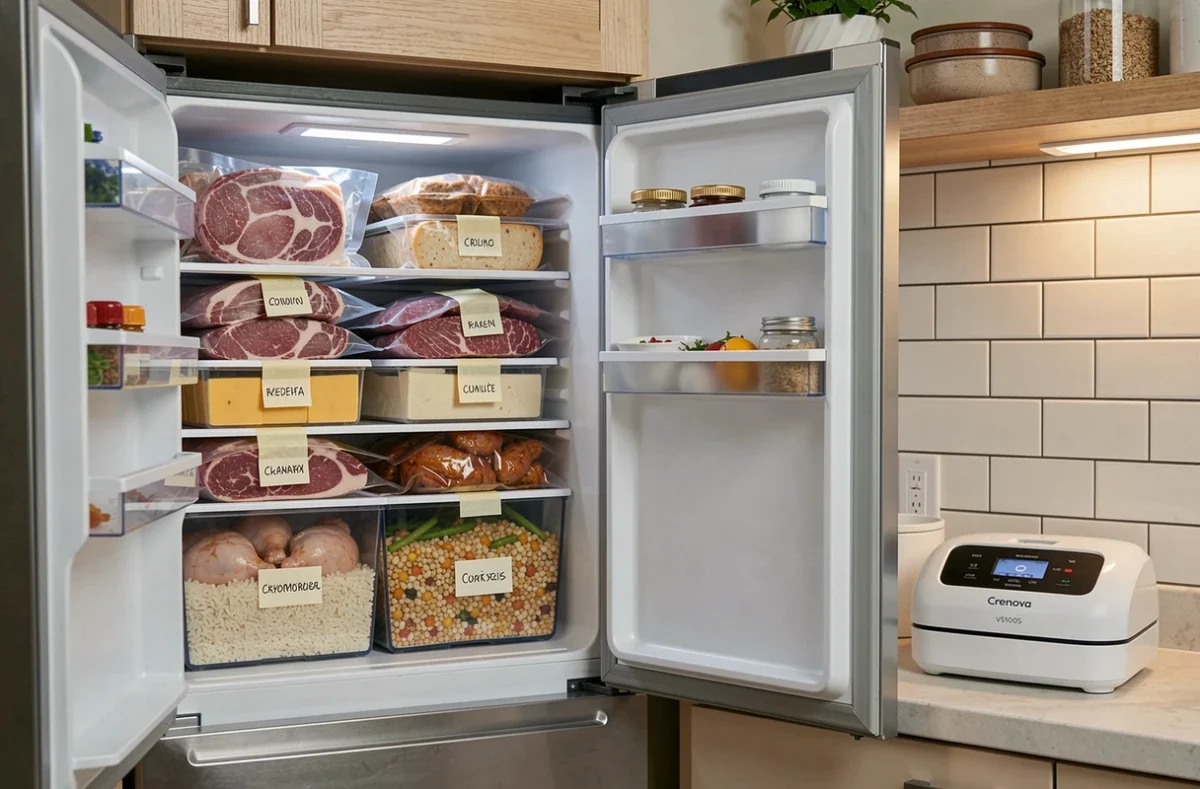
The VS100S suits different users depending on how they plan to use it. For someone who batch-prepares portions of meat or vegetables and stores them in the freezer, the appliance meets the need without major difficulty. Its real strength is the balance between an entry-level price and good sealing performance with dry foods.
For everyday use involving marinades, dishes in sauce or delicate fruit, pre-freezing and manually controlling suction with Pulse mode add time to each session. This is not a deal-breaker, but it is something to factor into your routine.
The deciding factor is how often you use it. Taking the appliance out once a week to package dry portions is straightforward. Using it every day with a variety of foods requires more care when cleaning the sealing bar and choosing bags suited to each type of storage or cooking.