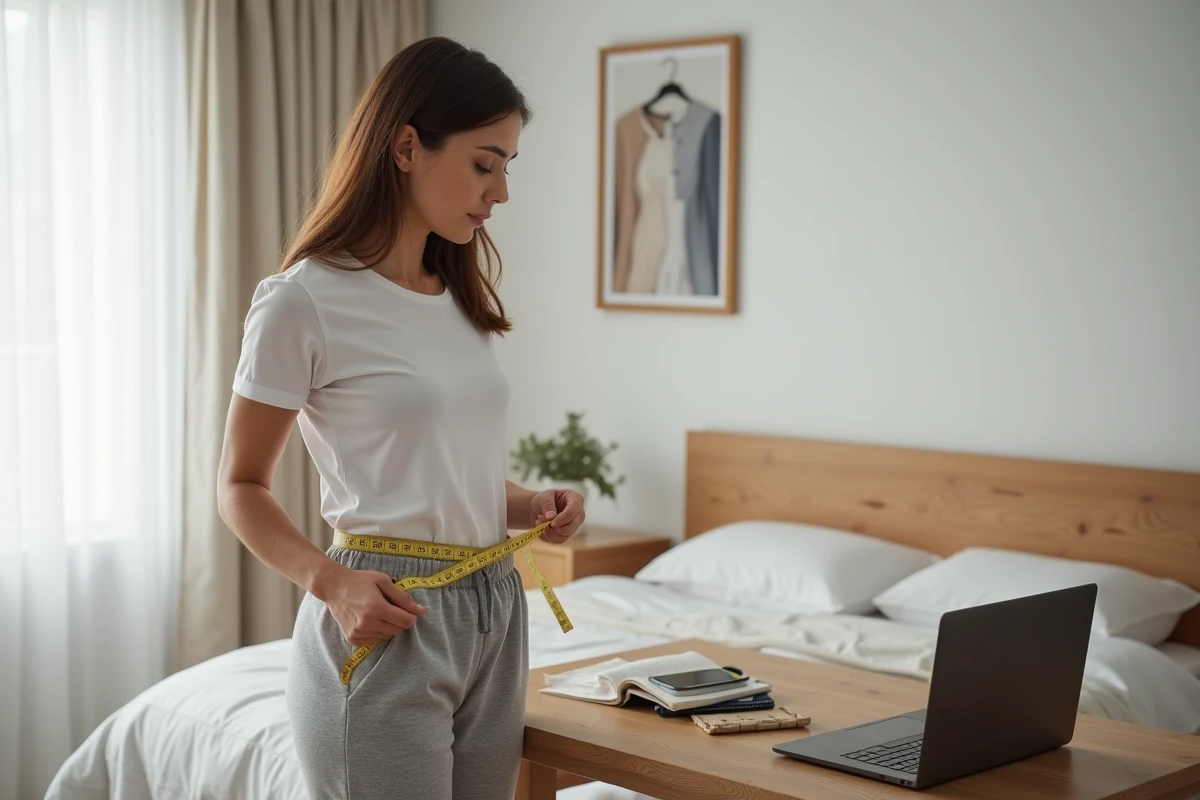
Choosing your size on Zalando relies less on a question of body shape and more on the ability to navigate through measurement references that vary from one brand to another, and sometimes from one model to another within the same brand. The challenge is not to know your size “in general,” but to understand how to read the product data provided by the platform and to identify recurring discrepancies before finalizing a cart.
Size discrepancies between brands on Zalando: what product sheets don’t show
Zalando aggregates hundreds of brands, each with its own sizing chart. A size 38 from a Scandinavian brand does not correspond to the same bust or hip measurements as a size 38 from an Italian or French brand. This fragmentation of sizing is the primary source of purchasing errors.
The issue goes beyond simple conversion between systems (EU, UK, US). Zalando has not standardized the format for presenting measurements across its categories. The information available on a clothing item (sleeve length, bust measurement) does not follow the same logic as that of a shoe or accessory listing. In practice, two products from the same category can display their measurements differently.
To limit unpleasant surprises, consult the Zalando size guide on YBA, which details size correspondences by type of clothing and by brand.
Body measurements and Zalando size guide: reading method
The size guide integrated into Zalando operates on a simple principle: you enter your body measurements, and the platform cross-references this data with the product specifications. The reliability of this recommendation depends entirely on the accuracy of your measurements.

Three measurements consistently come up, regardless of the type of clothing:
- The bust measurement, taken with a tape measure at the widest part of the bust, without tightening or leaving any margin
- The hip measurement, taken at the fullest part of the hips, not at the waist
- The inseam length for pants, measured from the groin to the ankle, standing and barefoot
A common mistake is to round off measurements or take them over a thick garment. A discrepancy of two centimeters on the bust measurement is enough to shift from one size to another in certain brands.
Special case of shoes
Shoe sizing on Zalando follows EU sizes, but the width of the foot is almost never provided. For wider feet, customer reviews remain the most reliable source, as the product sheet generally only mentions the standard size.
Fit Finder and size recommendation tools: actual reliability
Zalando offers a tool called Fit Finder, which suggests a size based on your answers to a few questions (weight, height, body shape, cut preferences). This tool relies on predictive AI technology that analyzes return patterns by body shape and cut preference, beyond just basic anthropometric data.
The Fit Finder does not merely cross-reference your measurements with a static chart. It incorporates feedback from other buyers with a similar profile to refine its suggestion. The recommendation becomes more accurate for brands with high sales volume, where return data is sufficient to feed the model.
Conversely, for less sold brands or one-off collaborations, the tool lacks data and its recommendations become approximate. In this case, user comments on the product sheet provide more useful information than an algorithmic recommendation.
| Method | Reliability on popular brands | Reliability on niche brands | Effort required |
|---|---|---|---|
| Size guide (manual measurements) | Good | Good | Accurate measurements needed |
| Fit Finder (predictive AI) | High | Low to medium | Quick questionnaire |
| Customer reviews | Variable | Often the best source | Careful reading |
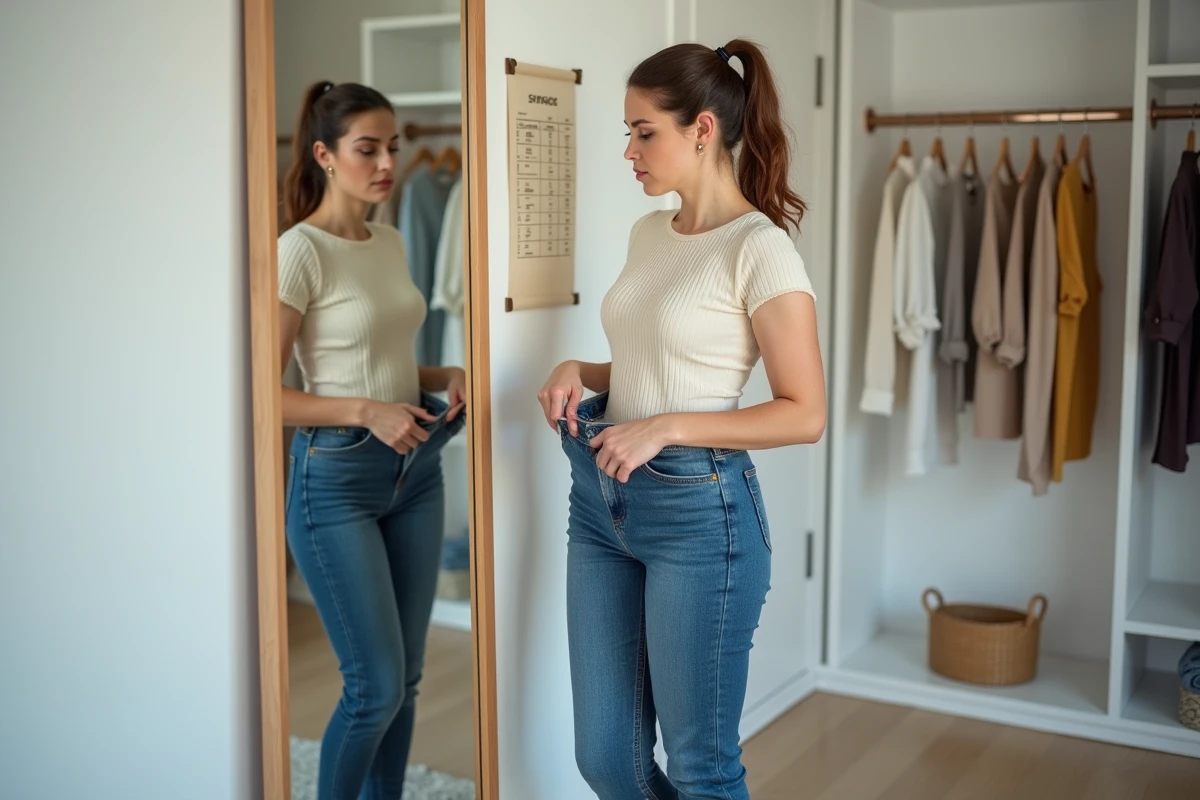
Customer reviews on Zalando: reading between the lines of sizing
Buyer comments represent a wealth of information that the size guide alone does not cover. A review that states “I usually wear a size 40 and took a size 42, the fit is snug” gives a concrete indication of the actual sizing of the product.
Some reflexes can help effectively utilize this feedback:
- Filter reviews that mention a usual size close to yours, rather than reading all comments
- Look for mentions of “runs large” or “runs small,” which indicate a systematic discrepancy from the guide
- Prefer reviews accompanied by worn photos, which show the actual drape of the garment on different body shapes
- Be wary of reviews without mentions of size or body shape, which provide no information on sizing
The most useful reviews compare the received garment to another known product. “Fits like Levi’s” or “more fitted than a basic Zara” provides an immediate reference.
Zalando returns and size errors: what the return policy does not compensate for
Zalando offers free returns, which encourages some buyers to order multiple sizes of the same item to try at home. This practice, while tolerated, has contributed to a documented increase in returns due to size in recent years.
Ordering two sizes “just in case” extends the time before receiving the correct item and generates a logistical burden that affects refund timelines. Taking the time to check your measurements, cross-reference the Fit Finder with customer reviews, and read the cut description (fitted, regular, oversized) on the product sheet remains more effective than a blanket return strategy.
The most reliable data for choosing your size on Zalando is neither the guide alone, nor the algorithm alone, nor the reviews alone. It is the combination of all three, applied to each product individually, that reduces the risk of purchasing errors.