The French clothing market is going through a period of contradictory tensions. On one hand, collections are being renewed at an accelerated pace driven by ultra-fast fashion. On the other hand, European regulations are starting to govern the destruction of unsold textiles, and second-hand items are gaining ground even in physical stores.
Between these two dynamics, the question of daily style arises differently: less as a race for new items, more as a balancing act between durable pieces, reuse, and thoughtful clothing choices.
Textile Repair and Style Evolution: An Underestimated Lever
Having a garment repaired is often seen as an act of preservation. This approach can also serve to transform an existing piece and refresh a look without additional purchases.
Specialized workshops report that jeans and puffer jackets are among the most frequently repaired items. After an initial sorting, very few garments are deemed irreparable. Shortening pants, modifying a neckline, or replacing a lining allows for adapting a cut to a silhouette or trend without starting from scratch.
This reflex changes the way a wardrobe is built. Instead of replacing an outdated coat, having it adjusted or dyed gives it a second stylistic life.
To follow these approaches and other practical angles on women’s and men’s wardrobes, the fashion section of Com 2 Net regularly offers insights into current trends.
Second-Hand in Stores: How Trying On Changes Daily Style
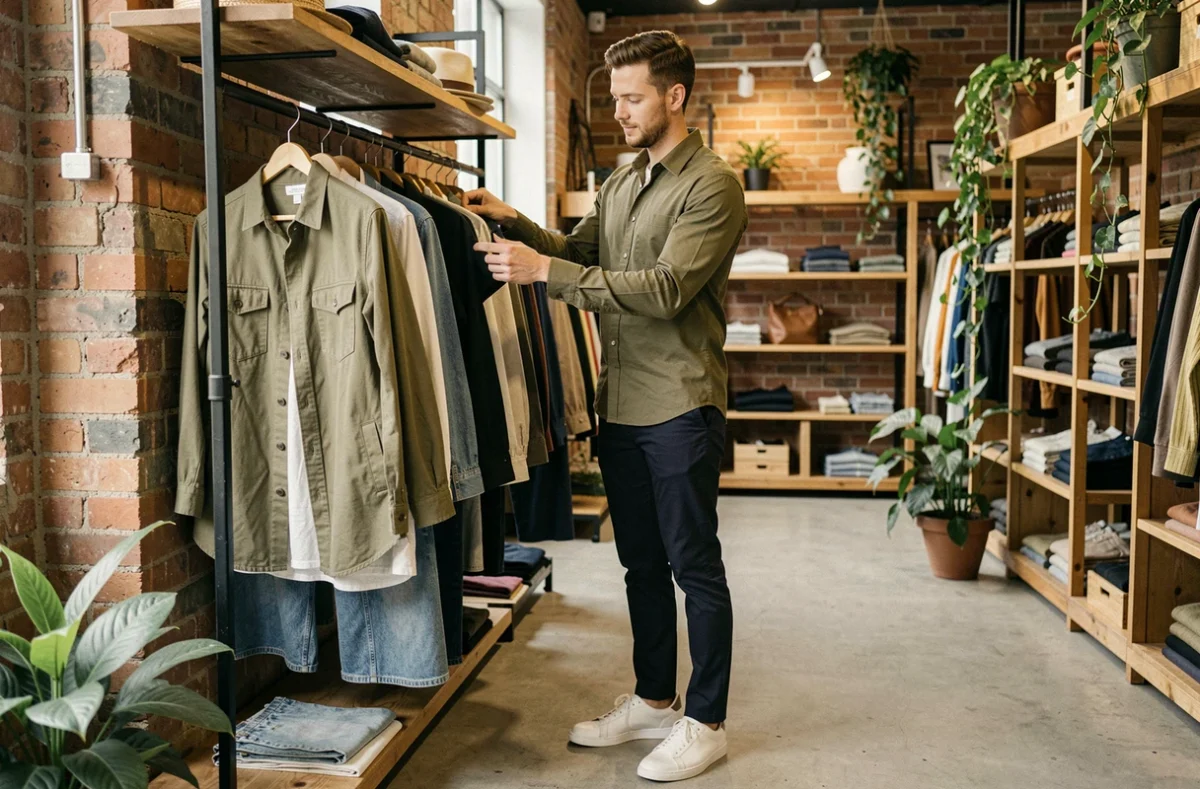
Online platforms dominate the second-hand textile market. However, a growing share of this activity is shifting to physical retail locations.
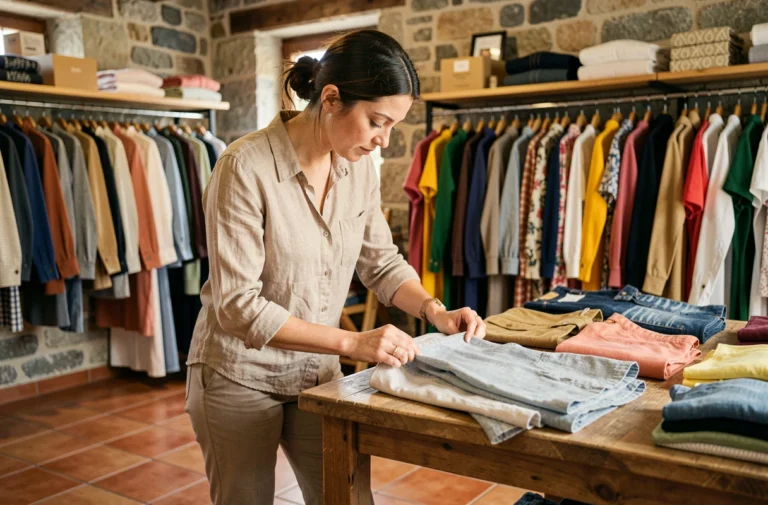
Trying on in-store changes the way one selects a second-hand piece. On screen, the choice relies on photos and approximate measurements. In-store, the feel of the fabric, the fit when worn, and the advice of a salesperson help determine if a garment truly fits into an existing wardrobe.
The Rebound Effect: Buying Second-Hand Doesn’t Always Reduce Consumption
A survey by Ademe and Obsoco highlights a counterintuitive phenomenon. The resale of clothing can fuel new purchases, with the recovered amount being used to finance other acquisitions. The environmental impact is therefore not as favorable as hoped.
For daily style, this data invites a distinction between two approaches:
- Renewing one’s wardrobe through rapid turnover, by reselling to buy again, which keeps a high volume of items in circulation
- Using existing clothing longer and more frequently, by varying combinations rather than multiplying purchases
- Targeting second-hand pieces of better quality than what one would buy new at the same price, to extend the actual usage duration
The second approach produces a more stable and personal style. It requires knowing which pieces work in one’s wardrobe and resisting the allure of constant renewal.
European Regulation on Unsold Textiles: What Changes for Collections
The European regulation on eco-design plans for the prohibition of destroying unsold clothing and shoes for large companies starting in 2026. This measure directly targets the overproduction model characteristic of fast fashion.
The consequences on the available supply in stores are not yet precisely measurable. Several scenarios coexist in industry analyses. Brands may reduce the volumes produced per collection, which would limit the diversity of models on shelves. They may also redirect unsold items to clearance or donation channels, increasing the supply accessible at reduced prices.
Less Choice on Shelves, More Attention to Basics
If collections tighten, versatile pieces and well-cut basics gain relevance. A wardrobe built around fundamentals (straight pants, poplin shirts, structured jackets) adapts better to a more limited offer than a wardrobe dependent on very trendy pieces renewed each season.
This logic aligns with what independent creators have long practiced: short collections, materials chosen for their durability, cuts designed to last through multiple seasons. The European regulatory framework could make this approach more visible in mainstream retail.

Building a Daily Look Without Relying on Micro-Trends
Social media accelerates the cycle of fashion trends. A style spotted in a viral post can seem outdated a few weeks later. This pace does not correspond to the reality of a functional wardrobe.
Three principles allow for maintaining a coherent style without a constant chase for new items:
- Identifying cuts that suit one’s body shape and sticking to them, even if the current trend favors a different silhouette
- Investing in accessories (belts, bags, shoes) that change the overall look of an outfit without requiring the replacement of major pieces
- Limiting impulsive purchases by applying a reflection period, especially for pieces spotted online
Daily style relies on controlled repetition rather than accumulation. Wearing the same pieces in different combinations requires a better understanding of one’s wardrobe, not a higher budget.
Data on the rebound effect of second-hand items, upcoming obligations regarding unsold goods, and the rise of repair workshops sketch a fashion landscape where the longevity of a garment becomes a style criterion as much as its cut or color. The next clothing purchase deserves to be evaluated not just on its price or immediate appearance, but on the number of outfits it can truly integrate into.