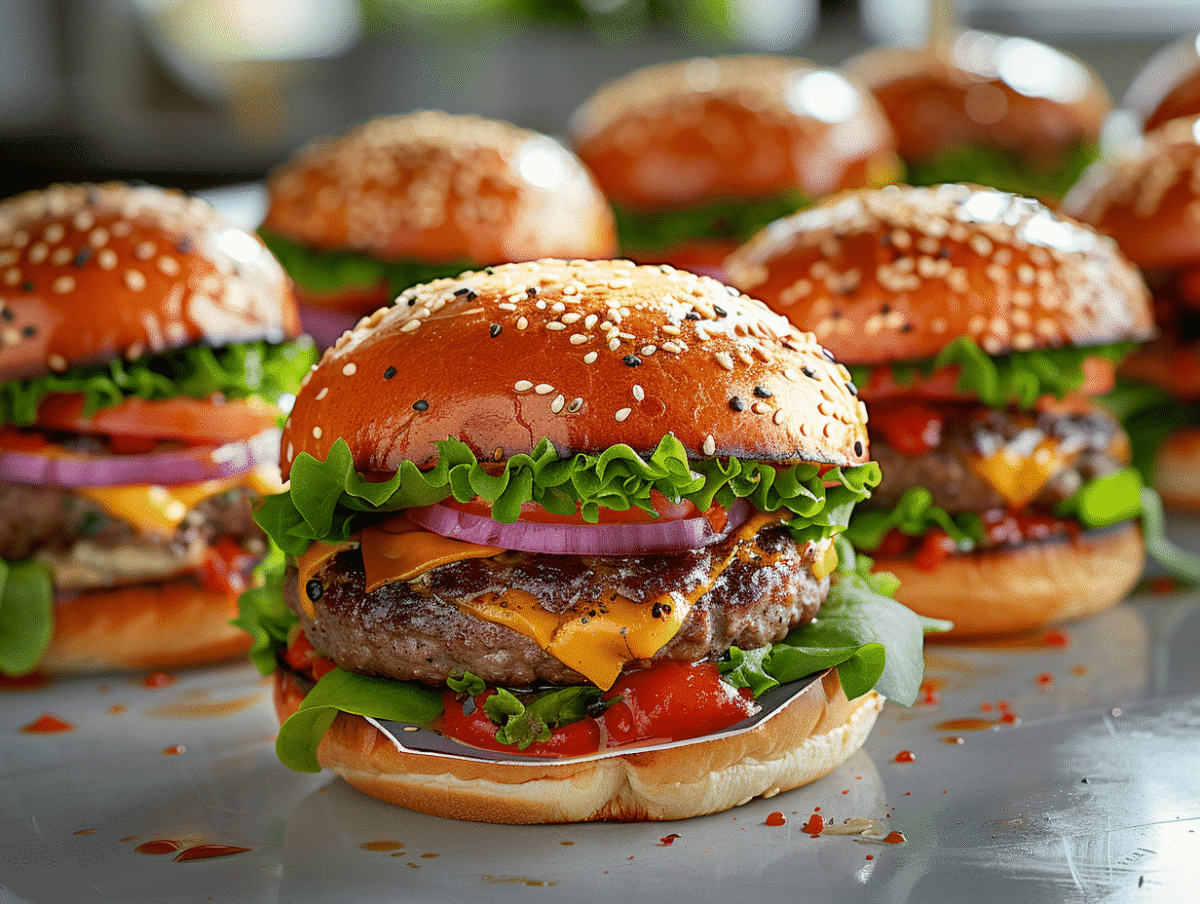
The debate over the caloric value of food is omnipresent in our health-conscious society. Burgers, emblems of fast food, are often at the heart of discussions related to dietary balance and obesity. Fast-food chains compete ingeniously to attract consumers, even at the cost of minimizing the nutritional impact of their products. Evaluating the calories of the most popular burgers reveals surprising truths that could alter public perception and influence dietary choices. This examination of the energy values of fast food options can shed light on their potential effects on health.
The Truth About the Calories of the Most Popular Burgers
In the world of fast food, the burger reigns supreme. Surpassing the perennial ham-and-butter sandwich in France, this culinary icon of American culture finds its place on the menus of millions of consumers. Chains like McDonald’s and Burger King greatly contribute to this popularity, offering a variety of products that attract a wide and diverse audience. But beneath the weight of this massive consumption lies a nutritional reality that deserves examination: the calories of these iconic burgers.
Take the Big Mac, for example. With 503 calories, this burger is often the reference point for caloric comparison in the fast-food industry. The components of this sandwich—two beef patties, cheddar, white bread, and sauce—contribute to a significant energy intake. The question arises: is the big mac calories an indicator of the nutritional value of this product? Or do these figures mask a greater complexity related to proteins, fats, and other nutrients?
On its part, the Whopper from Burger King positions itself as a serious competitor with its 660 calories. The beef, the round sesame seed bun, mayonnaise, and ketchup give this burger an even higher caloric density. Consuming such products, in the absence of adequate physical activity, can lead to weight gain and even more serious health issues. Public health is thus directly impacted by the composition of these flagship foods.
Faced with these figures, one must wonder what the effect of regular consumption of these burgers is on our health. Certainly, fast food meets a need for convenience and speed. The choice of foods we ingest has significant consequences. Fast-food chains, aware of these issues, strive to diversify their menus, offering alternatives with fruits and vegetables or lower-calorie options. However, the consumption of burgers like the Big Mac and the Whopper remains predominant, reflecting a lifestyle where speed often takes precedence over nutritional quality.
The truth about the calories of the most popular burgers invites us to reflect on our dietary choices. Products from McDonald’s and Burger King, while tasty and convenient, provide a quantity of calories that must be considered within the framework of a balanced diet. Moderation remains the key word, while consumer awareness regarding ingredient quality and the necessity of a varied and balanced diet proves fundamental.
Comparison and Nutritional Analysis of Iconic Burgers
In the arena of fast food, the Big Mac from McDonald’s and the Whopper from Burger King hold the spotlight. The former, with its 503 calories, consists of two beef patties, cheddar, a specific white bun, and a sauce whose recipe is kept secret. The latter, more caloric with its 660 calories, is made up of a large round sesame seed bun, a generous portion of beef, topped with mayonnaise and ketchup. These two burgers, while similar in shape, diverge significantly in their energy contribution and ingredients.
Considering the nutritional data, the difference of 157 calories between these two fast-food giants is not trivial. It reflects the variability of the components and their impact on total caloric intake. The presence of richer sauces and the use of denser bread can significantly influence the calorie count. The quality of the ingredients, often highlighted by consumers concerned about their health, must also be taken into account in this equation.
The consumption of such foods, within the framework of a balanced diet, requires particular attention. Regular practice of physical activity and a varied diet, incorporating fruits and vegetables, are essential counterpoints to these high caloric intakes. Fast-food chains, facing a growing demand for transparency and quality, are attempting to respond by offering healthier options. However, the popularity of the Big Mac and the Whopper reflects a reality: the burger remains a dominant figure in our consumption, challenging the principles of cautious and measured eating.