Complex and controversial, the light cannabis supply chain in Italy continues to fascinate and interest a wide audience. Despite recent provisions regarding CBD, which saw a decree from the Ministry of Health insert oral preparations based on this cannabinoid into the single text of medicines, only to be withdrawn later, and despite a war against the sector that has been ongoing since its inception, there remains a public of consumers, potential producers, and general interest in hemp and its derivatives. Because light cannabis today remains a significant opportunity to both overcome the economic crisis and reconcile the development of the economy with the well-being of the planet.
We had this article ready for some time, but given the current situation, we had doubts about whether it was appropriate to publish it or not. We decided to go ahead to provide a new testimony of how this is a healthy agricultural sector, whose products have not caused any social or health issues during years of massive use, and which is just waiting for one thing: for politics to agree and regulate its use and definitive standards so that it can be traded without fear of lawsuits or seizures.
Because there is a wide and truly heterogeneous audience of people attracted by the idea of realizing a dream, who often face this market without specialized preparation in this sector and always ask the same question: “How much do you earn with light cannabis?”. Here are the responses from producers.
The startup costs of a hemp cultivation business We wanted to study, with the help of three professionals in the field, the entire production process to present an overview of costs and an estimate of revenues. We structure the analysis into three main categories:
— Indoor: growing in a used room, with lights and heating/cooling and ventilation systems, allows for more cycles per year.
— Outdoor: classic open-field cultivation.
— Greenhouse: greenhouse cultivation that allows the plant to be protected while being exposed to the benefits of natural light, with the possibility of also using artificial lights.
LIGHT CANNABIS IN CULTIVATION

Indoor cultivation artificially recreates a plant-friendly environment, entirely managed and controlled by the producer (light, air, temperature, humidity, and nutrition). The more professionally these parameters are managed and controlled, the more prosperous the growth and flowering of the hemp plants will be. To analyze the costs and yields of this type of cultivation, we turned to producer Niccolò Pozzolini from Flower Factory. Flower Factory is an Italian company owned by Flower Farm that obtains a certified product grown in a controlled environment. The plant meets the requirements of a constantly evolving market with areas for flowering and maintaining genetically important strains. Certifications attest to the entire supply chain, from origin to cultivation methods, from the absence of chemical additives to manual harvesting.
Units of measurement
To structure a good business plan, one must start from a minimal unit of measurement that will be used to calculate all costs and yields in terms of production. In the case of indoor cultivation, Niccolò outlines the costs of a 100 square meter indoor greenhouse. “Given a total cultivation area, it is necessary to create access spaces, product handling areas, and pathways to move between the plants. Therefore, on 100 square meters, on average, 45% to 55% is lost for pedestrian passage areas.”
How many plants per square meter and what yield
“There are different cultivation techniques, the two main ones being SOG and SCROG. The first involves placing many plants, up to 25 per square meter, and skipping the vegetative phase, immediately imposing the daylight hours for flowering, 12 hours of light and 12 hours of darkness. The second involves many fewer plants per square meter, up to 9, a longer vegetative phase, and the use of a horizontal net where the intertwined plants grow. SOG and SCROG correspond to two different schools of thought, but on average, both have a yield of 450 grams per square meterThe cost of plants varies from 3.50 to 5.50 euros. In both cases, procedures and processes change. The choice concerns the organization of work and the preferences of the producer. I prefer the SCROG technique; in my opinion, the CBD plant needs vegetation to develop a good flower; it must develop its entire system before it can produce the flower. Moreover, while it is true that with the SOG technique, you gain weeks of vegetation and therefore perform more cycles in a year, the same technique imposes higher costs, even just regarding the amount of handling soil or labor for maintenance, multiplied by the number of plants you wish to use. There are seedlings that cost much less, but the advice is to invest in the quality of the variety you choose.”
The lights
“Each square meter must be illuminated with at least 400 watts. Even for lights, there are two schools of thought divided on the choice of lamp type: HPS, or more advanced CMH models, and LED. Classic HPS lamps produce a lot of heat, and the temperature will need to be adjusted; on the other hand, LED lamps do not produce heat at all, and even in this case, the temperature will need to be adjusted. Another important factor is the light spectrum of each. With HPS or CMH lamps, the light spectrum is continuous, which will benefit the plant in terms of terpenes. It is also established that with LEDs, you do not produce very swollen flowers, but rather more compact ones. A good LED, comparable to a 600-watt HPS, has a higher initial cost but consumes much less, costing around 700 euros per LED and 300 euros for the HPS. For the area we calculate, and considering that you need 400 watts per square meter of cultivated area, you will need 50 HPS or 60 LEDsthe electricity needed for both the lamps and the air conditioning system, we are around 6,000 euros per cycle with HPS lamps. For an approximate estimate of the cost of.
Soil and water
“Several factors will also need to be considered for this choice. With clay, it is produced in hydroponic cultivation; the pots are filled with expanded clay, and the roots of the plants are exposed to the air. Water flows inside the pots throughout the day in a continuous cycle and drains until it exits the bottom of the pot to be collected and reinjected into circulation. At the end of the cycle, the clay is cleaned and reused in the new cycle, unlike soil which must be discarded. The cost of soil is high because it is necessary to choose the highest quality soil. You spend 1,000 euros per cycle. Regarding irrigation, we have a low cost for a 3,000-liter water tank of about 500 euros. The control unit that regulates the amount of fertilizer and pH costs much more; we are around 3/4 thousand euros. With soil, we will have the cost of water consumption, and not with hydroponic cultivation because the water returns to circulation. On the other hand, in hydroponic cultivation with clay, the entire environment must be very controlled because the roots are exposed; soil serves more as a buffer.”
Labor
“For a total indoor area of 100 square meters, at least two people need to work together every day on the plants, and in the case of outdoor cultivation, in hydroponics, there can be just one person, perhaps with a little help. Then there are the two periods of setup and harvest. For the first phase, 5 people are enough in addition to the 2 who follow the plant for two days. For the harvest, you must choose to do everything by hand (picking and cleaning the flowers) or rely on machines. The machines have high costs that, however, are paid with the first cycles: 3/4 thousand euros for the trimming machine, that is, for harvesting, and 5,000 euros for the mower for cleaning the flowers. If you want to do everything by hand, you must plan for 10 people working for 10 days, for a total of over 3,000 euros per cycle.
Agronomic advice
“The advice of an agronomist specialized in hemp, if needed, can have a very varied cost. Some ask for a normal salary, let’s say 1,500 euros to 1,800 euros, while others ask for 10,000 or 15,000 euros for advice. There has not yet been a custom in the sector in this regard.”
The yield
“A plant, as we have structured it so far, must at least give a yield of 23 kilograms per cycle. Regarding the estimate of the number of cycles that can be performed in a year, it is necessary to keep in mind the efficiency of the organization of work and the fact that this is an industrial production in which the vegetative phase is minimized. We go from 4 to 6 cycles for those who are very good and organized in a state where everything works perfectly.”
LIGHT CANNABIS IN OUTDOOR CULTIVATION

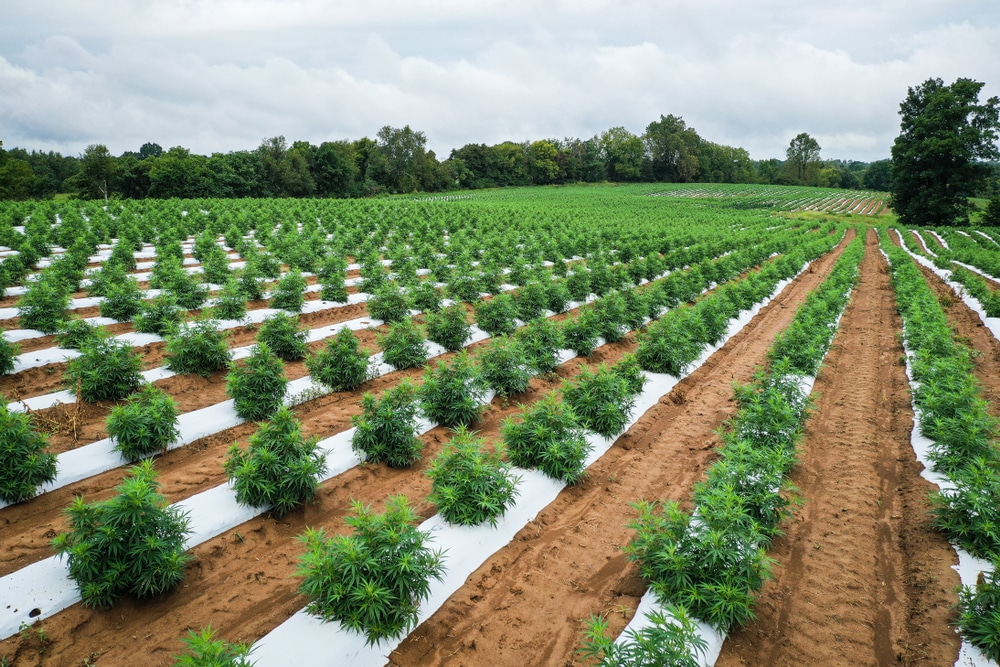
To show us the operating costs of outdoor cultivation, we asked the company CanapaAroma. The company was born from the idea of 4 growers and anti-prohibitionists in 2015, anticipating the change in Italian legislation on hemp and a new season of cultural opening regarding plants. They currently work with their brand #SENSIBREAK on the research and development of CBD and CBG lines, both derived from hemp varieties originating from high cannabidiol strains from around the world, with the aim of keeping THC below the Italian limit of 0.6% and creating plants, feminized seeds, and flowers that maintain the terpenic and appearance characteristics of Indica cannabis.
The land
“We take one hectare as a unit of measurement. If you do not have land, the first expense to budget is the rent. One hectare of clean agricultural land, equipped with electricity, fenced, and served with water has an annual cost of about 2,000 euros, at least in our region of the province of Rome. Then we have the annual cost of plowing and grinding of about 500 euros. For the mulching and drip irrigation pipes, there is a one-time cost of about 1,000 euros. It is also advisable to have both the soil and water analyzed to understand if and how to correct nutrients. The analyses cost 200 euros each.”
Plants and fertilizers
The cost per thousand seedlings is about 1,500 euros. On one hectare, you can place 4/6,000 for a total cost between 6 and 9,000 per hectare. To estimate the cost of fertilizers, it is necessary to understand what soils and waters are lacking with the help of analyses. For example, the cost of manure or ammonium nitrate is about 200 €/300 € per hectare. It is then necessary to check for the presence of fungi or pests to estimate the possible costs of treatments, which we can still estimate at around 500 euros per hectare.
Agronomic advice
Agronomic advice specialized for hemp crops has a variable cost between 1,500 and 5,000 euros, depending a lot on the type of advice offered, where the crop is located, and largely on emergencies that may arise requiring the professional’s inspection.
Labor
“For the planting of seedlings, calculating 6,000 plants on one hectare, you need 4 people for 4 working days of 6 hours of work. The cost is about 60 euros per working day per person. The cleaning of the product can be done by hand or with special machines costing about 5,000 euros. If cleaning is done by hand, you need to account for 4 people for 10/15 days.
Drying
“For the harvest, you need to budget for labor and a room to dry the product. It is therefore necessary to have an electric shed for ventilation and dehumidification. The product harvested from one hectare will require at least 1,000 square meters for drying. A shed of this size has a rental cost of 1,000/1,500 euros per month for one month/one and a half months of drying.
Security
“It is also very important to estimate a cost to prevent theft during drying and cleaning. An armed guard on a night shift is the highest cost of all.”
Yield
If you work well, one hectare can yield even 500 kg of clean flowers. The average is to sell 50 kg per month.
CANNABIS IN GREENHOUSE

The greenhouse cultivation technique uses greenhouses set up on cultivated fields. It represents an excellent compromise between the other two techniques, indoor and outdoor. Thanks to greenhouses, producers can control the environment, air circulation, and light, without having to give up solar energy. To provide an overview of the costs of this type of cultivation, we turned to Ferme Moncada di Licata in Sicily. The company has been around for a long time, dating back a century. Since 2016, it has decided to integrate its production of fruits and vegetables, characterized by increasingly reduced profit margins, with hemp. The owner Salvatore Incorvaia explained all the costs related to starting and maintaining a 1,000 m² greenhouse.
The soil and the greenhouse
“When you buy or rent land to cultivate, the cost depends on where you want to cultivate. Here in Sicily, in our area, the purchase cost is about 2,000 euros or 500 euros per month for rent. As for the greenhouse, however, the cost is much higher; for the purchase of a 1,000 square meter greenhouse, you need between 12 and 15,000 euros. You must then estimate the cost of soil preparation and treatments: we are at about 1,500 euros per cycle.
The plants
“The plants need on average 2 euros each. We harvested 780 plants from the 1,000 square meters cultivated under the greenhouse for a total cost of 1,560 euros. But the price of seedlings can also vary greatly in the market; let’s say that 2/2.5 euros each is the average of what is on the market.”
Irrigation
“For the irrigation of the greenhouse, you will need a 5,000-liter tank with a purchase cost of 1,300 euros and a consumption cost, electric to operate it and water, of 1,500 euros per cycle. The irrigation system is included in the price of the greenhouse.”
Labor
“To operate the greenhouse, you need two people working full-time throughout the cycle. You must add at least one more person for the decantation which can last 2/3 days and about ten workers for the harvesting and cleaning of flowers phase, over a period of 10 days.
Yield
“Our 1,000 square meter greenhouse yielded 200 kg of clean flowers ready for sale. An average of 260 grams per plant.”
Cannabis light: wholesale prices
To complete this overview, it is necessary to study the revenues of each type of cultivation. The wholesale price of hemp flowers varies significantly depending on the cultivation technique of the product. To explain this gap, we wanted to consult different operators in the sector. They range from a minimum of 200 euros per kg for outdoor grown product to a maximum of 1,600 euros per kg for indoor grown product. As for the product grown in greenhouses, the gap is really wide: it varies from 300 euros per kg to a maximum of 700 euros per kg.
The wholesale price is influenced by many factors: the aesthetic and organoleptic qualities of the flower, the cannabinoid content, the time of year of the sale, characterized more or less by the rarity of supply; the possibility of signing contracts for discounted withdrawals at the beginning of the harvest; the methods and payment terms; in addition to the market instability due to gaps and controversial regulations governing it.
The editorial team of CanapIndustriale.it
Tag: More info on CBD